
Pilgrimage
HOME | PILGRIMAGE
PILGRIM’S PRAYER
“Saint James the Apostle, chosen among the first, you were the first to drink the Lord’s chalice and are the great protector of pilgrims: make us strong in faith and joyful in hope as we journey as pilgrims along the path of Christian life. Encourage us so that, at last, we may attain the glory of God the Father. Amen.”
JERUSALEM, ROME AND SANTIAGO
The pilgrimage to Santiago
The Camino de Santiago, the first European Cultural Route and a World Heritage Site, is one of Christianity’s oldest and most important pilgrimage routes. Since the discovery of the tomb of Saint James the Apostle, countless pilgrims have set out for Compostela to venerate his relics, creating a whole culture of pilgrimage to Santiago across Europe.
Pilgrimage is a rite shared by the vast majority of religions. Santiago is one of Christianity’s three great pilgrimage cities, alongside Jerusalem and Rome. From the ninth century, European Christians who saw their faith threatened by the advance of Islam reaffirmed it by making a pilgrimage to the newly discovered tomb of Saint James the Apostle. Step by step, routes leading to Santiago de Compostela took shape, creating a form of unity between the different countries and regions of Europe.
The twelfth and thirteenth centuries were the golden age of pilgrimage to Santiago. Later, the Renaissance and the Reformation brought attacks on the tradition of pilgrimage to Santiago, which nevertheless endured, though with fewer pilgrims.
Pope Leo XIII’s bull Deus Omnipotens, which confirmed the authenticity of the apostolic relics, gave fresh impetus to the pilgrimage to Santiago. It continued to grow throughout the twentieth century and remains strong and flourishing today.
The pilgrimage to Santiago leads us to the tomb of an Apostle: one of the Twelve who belonged to Jesus Christ’s inner circle and was responsible for the evangelisation of Hispania, passing on the original faith received from Jesus.
TRADITIONAL ROUTES
The Camino
There are different routes for making a pilgrimage to Santiago. Traditionally, pilgrims set out from their own homes to reach the “House of Saint James”, the Cathedral, so it would be difficult to identify every pilgrimage route.
The Camino de Santiago is not an end in itself, but a means of reaching the destination: the tomb of Saint James. Nevertheless, several well-known traditional routes draw the greatest numbers of pilgrims:
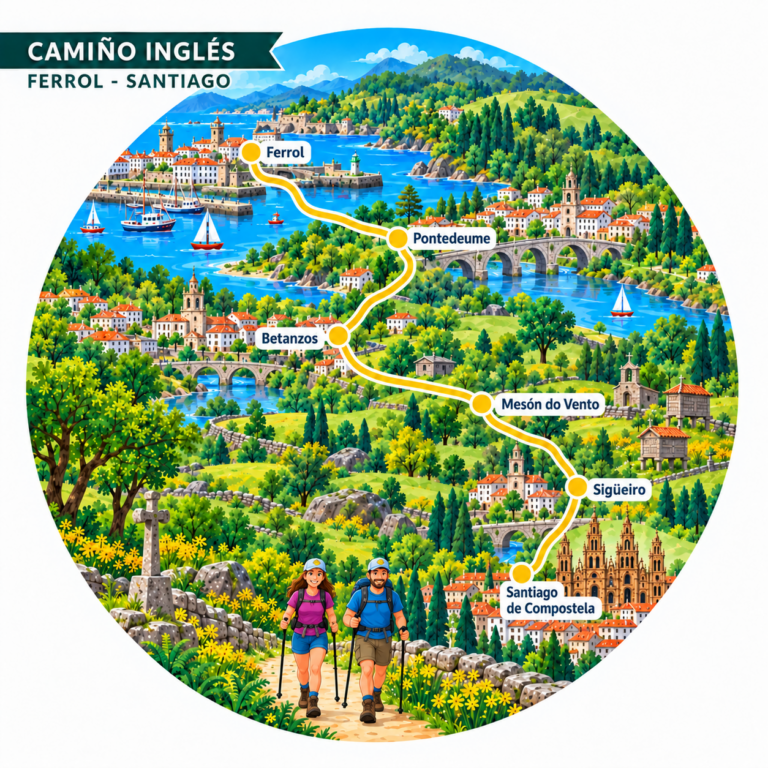
English Way · from Ferrol
Pontedeume → Betanzos → Mesón do Vento → Sigüeiro → Santiago de Compostela.
Explore the route →
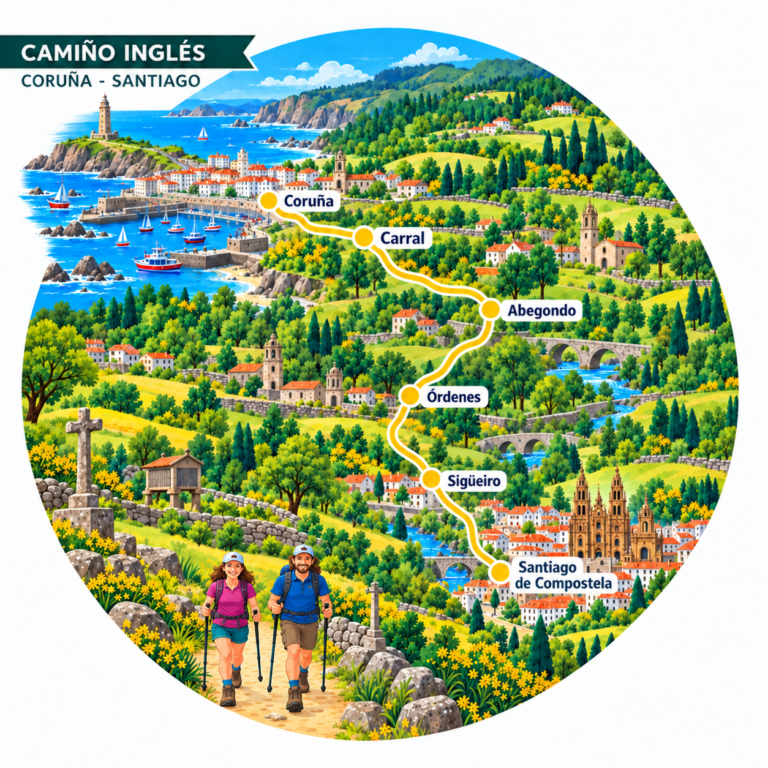
English Way · from A Coruña
Carral → Abegondo → Ordes → Sigüeiro → Santiago de Compostela.
Explore the route →
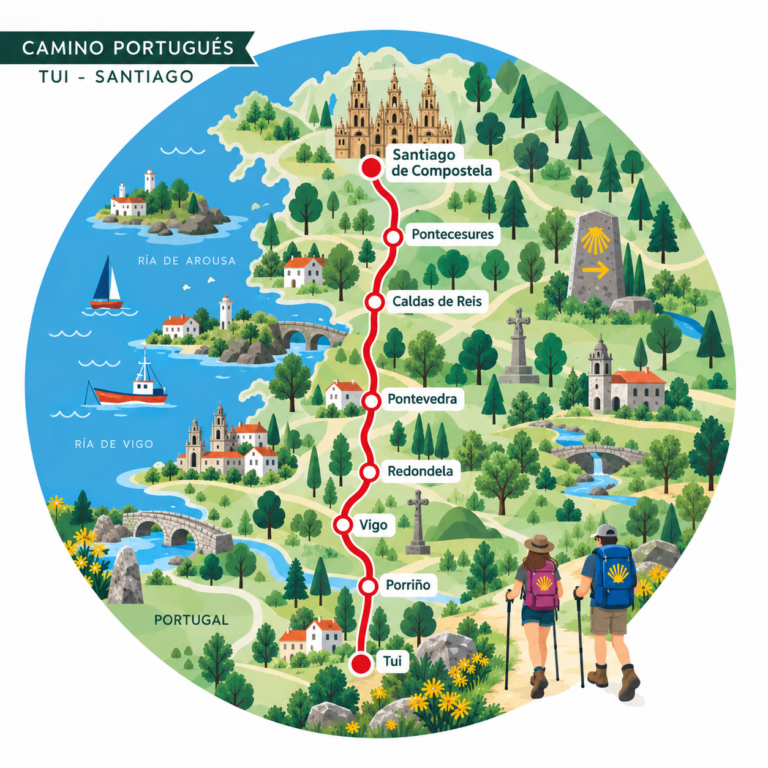
Portuguese Way
O Porriño → Redondela → Pontevedra → Caldas → Padrón → Santiago de Compostela.
Explore the route →
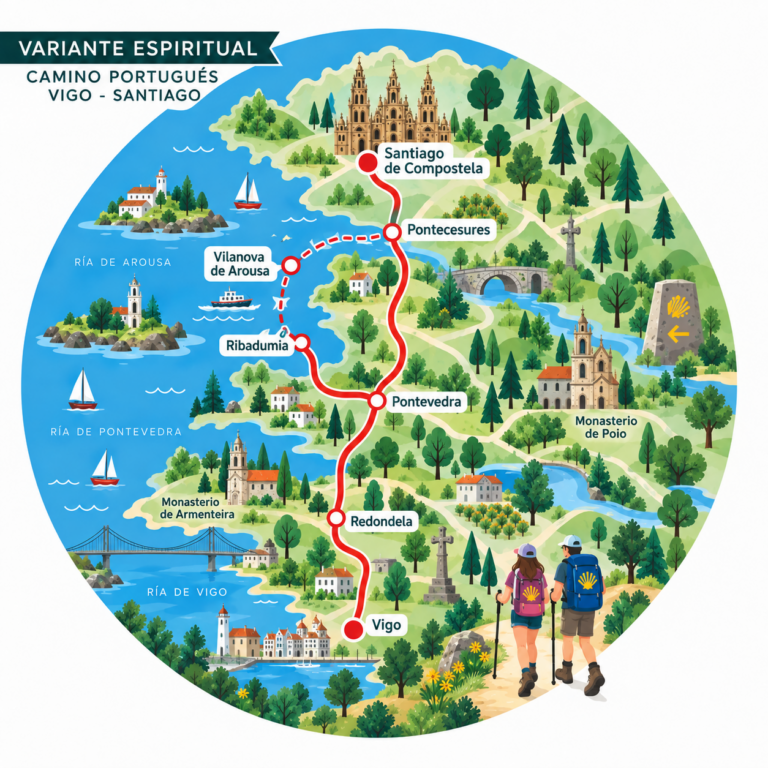
Spiritual Variant
Soutomaior → Poio → Ribadumia → Vilanova. Boat stretch to Valga or Pontecesures → Santiago de Compostela.
Explore the route →
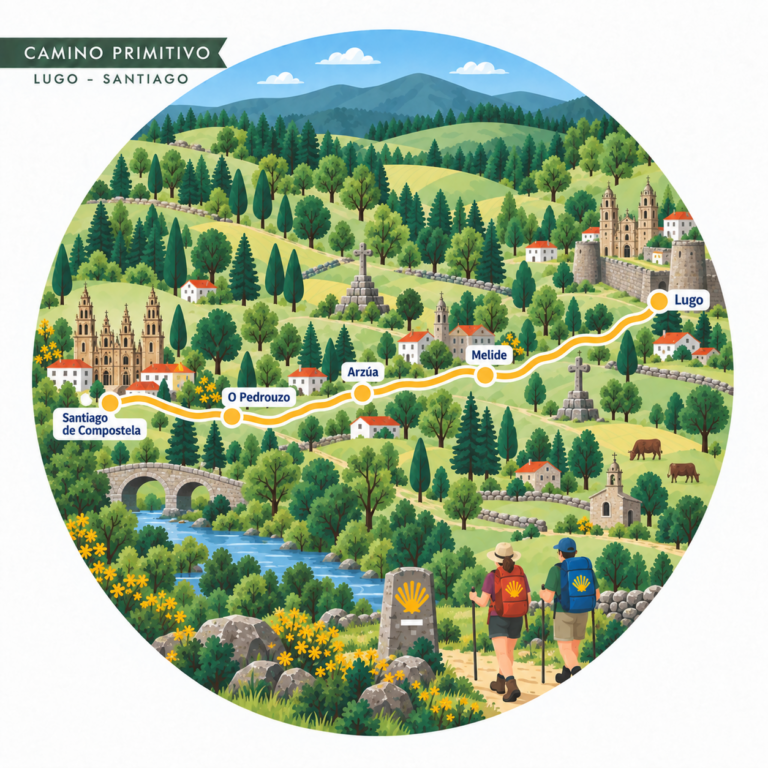
Primitive Way
Friol (Guntín) → Melide → Arzúa → Pedrouzo → Santiago de Compostela.
Explore the route →
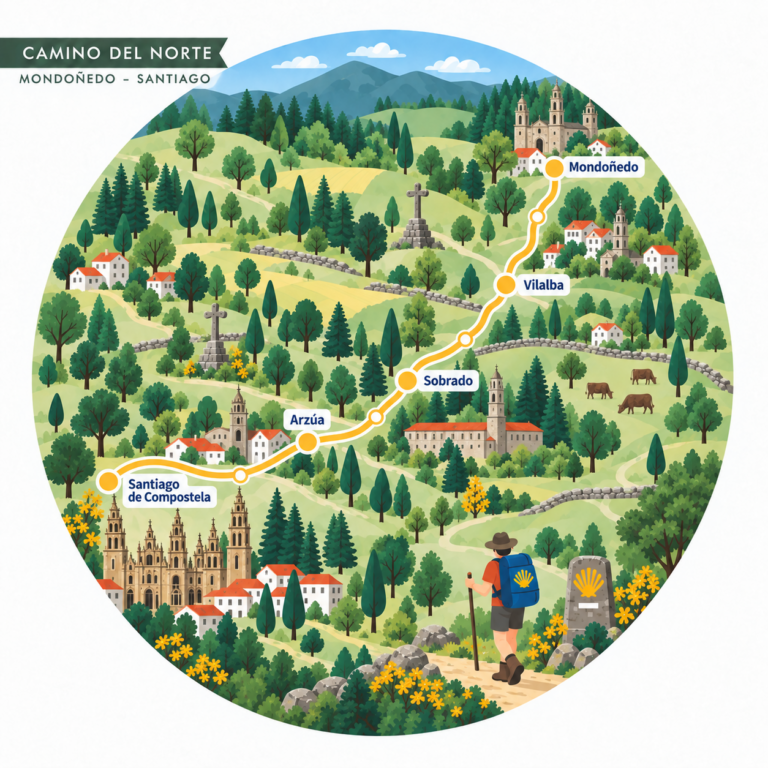
Northern Way
Begonte → Sobrado → Arzúa → Pedrouzo → Santiago de Compostela.
Explore the route →
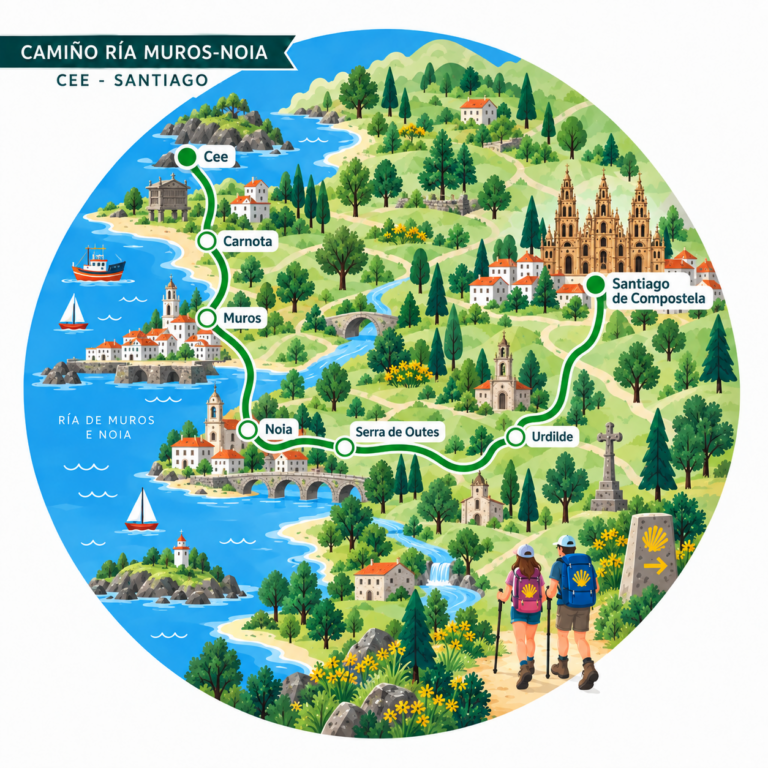
Muros-Noia Estuary · from Cee
Carnota → Muros → Serra de Outes → Noia → Urdilde → Santiago de Compostela.
Explore the route →
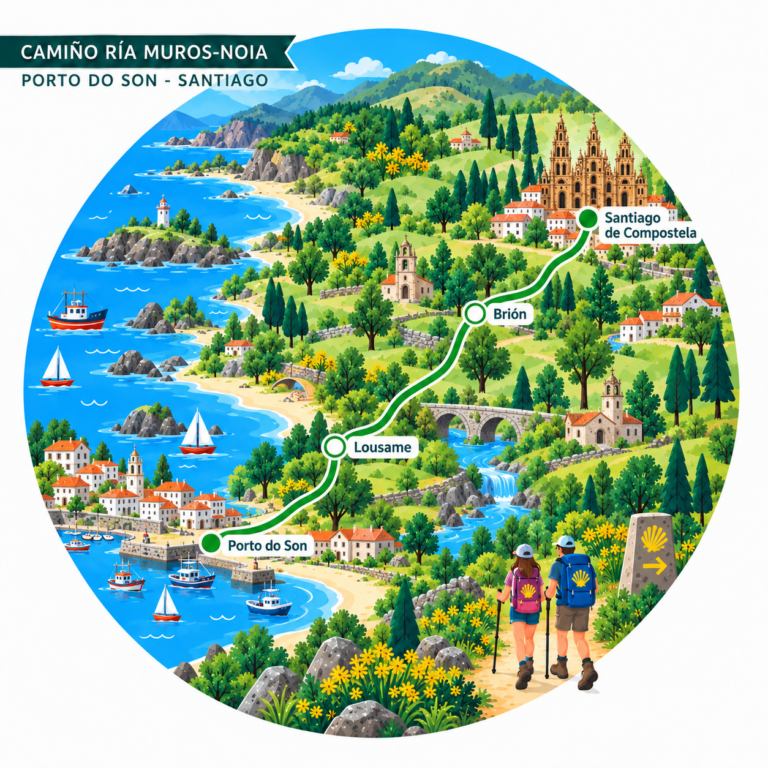
Muros-Noia Estuary · from Porto do Son
Lousame → Brión → Santiago de Compostela.
Explore the route →
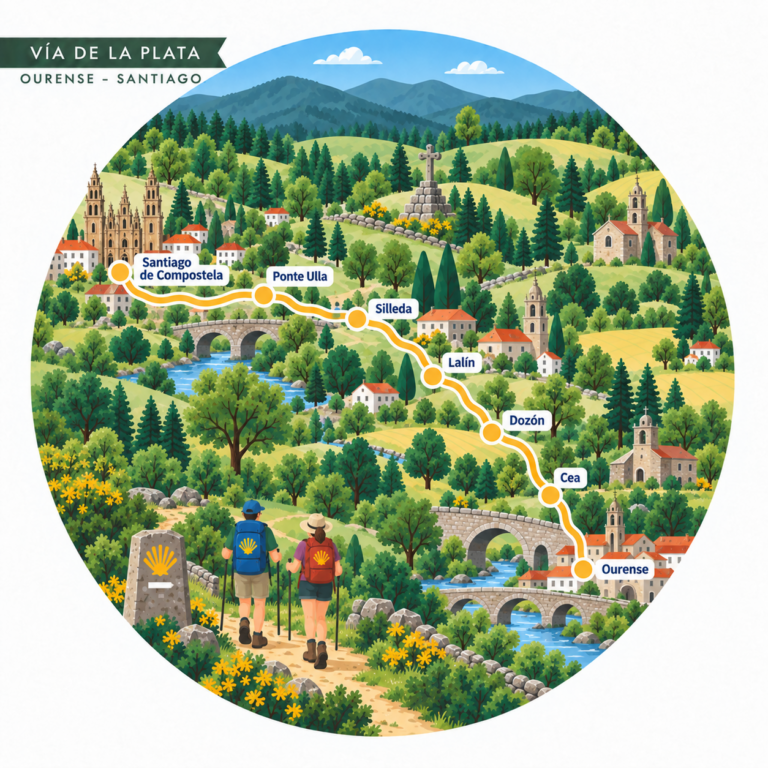
Via de la Plata
Cea → Castro Dozón → Lalín → Silleda → Lestedo → Santiago de Compostela.
Explore the route →
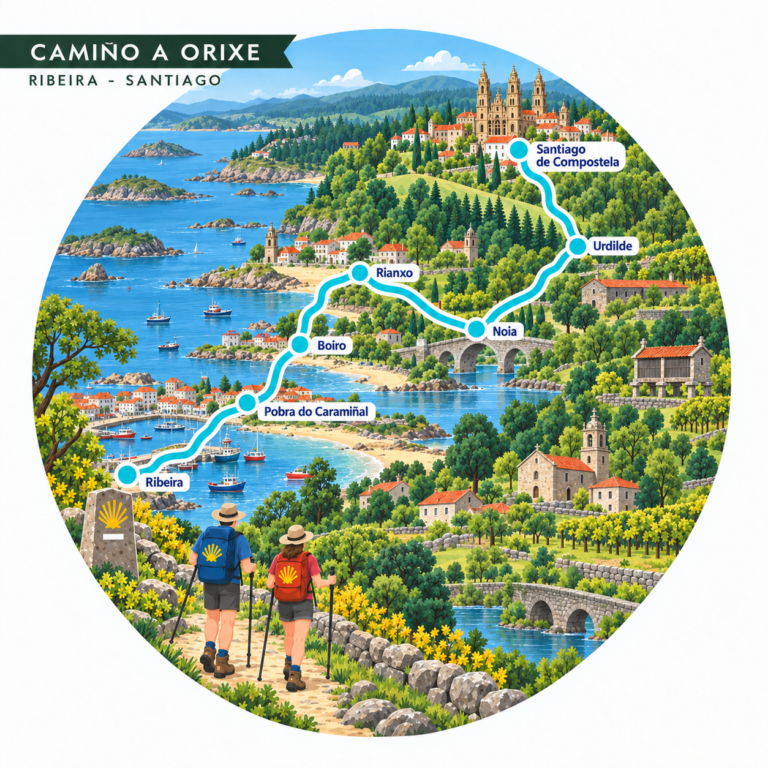
Camino A Orixe
Pobra do Caramiñal (Xobre) → Boiro → Rianxo → Dodro → Teo or O Milladoiro → Santiago de Compostela.
Explore the route →
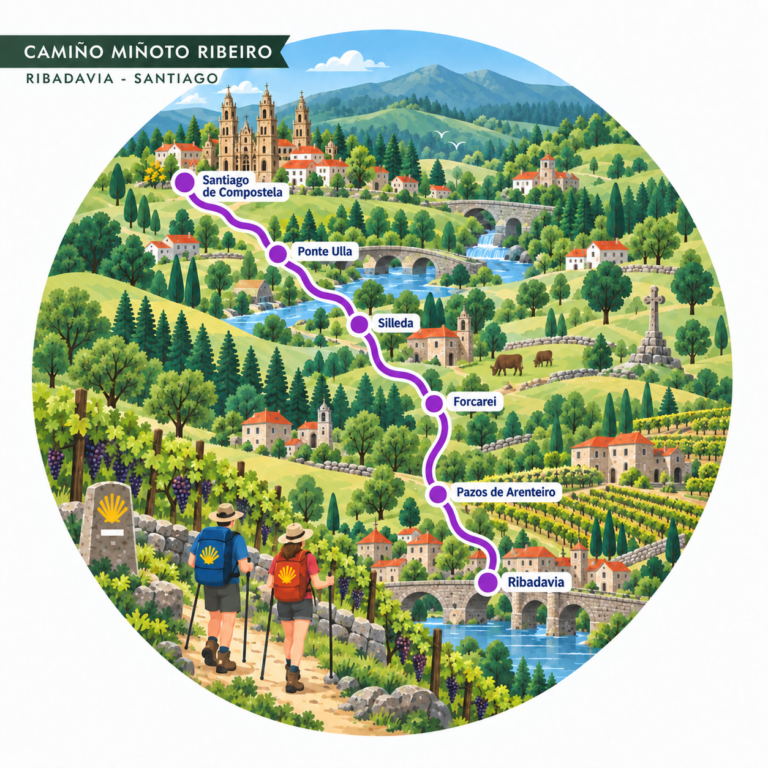
Camino Miñoto
Boborás → Forcarei (Soutelo de Montes) → A Estrada (O Foxo) → Vedra → Santiago de Compostela.
Explore the route →
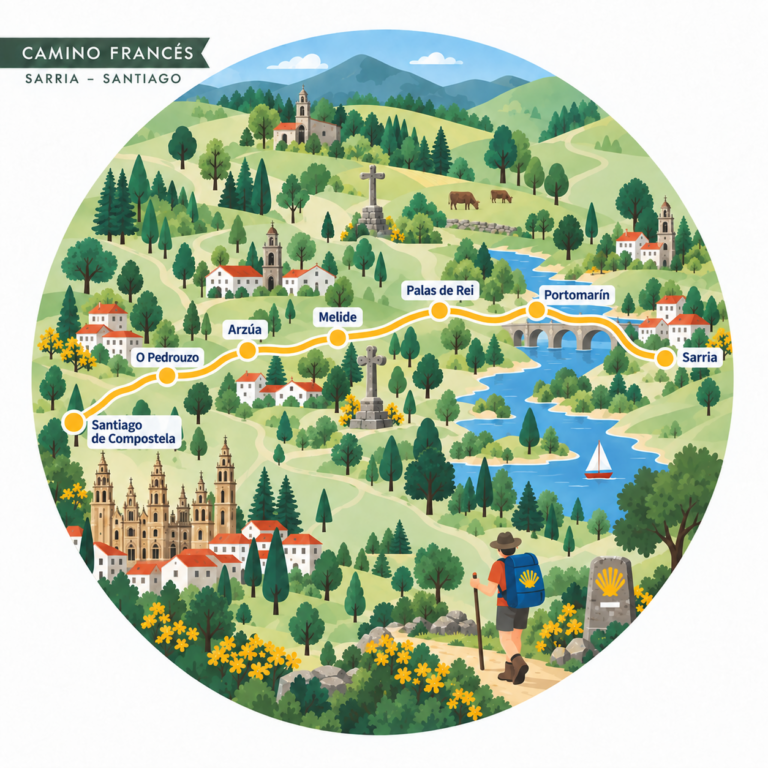
French Way
Portomarín → Palas de Rei → Arzúa → Pedrouzo → Santiago de Compostela.
Explore the route →
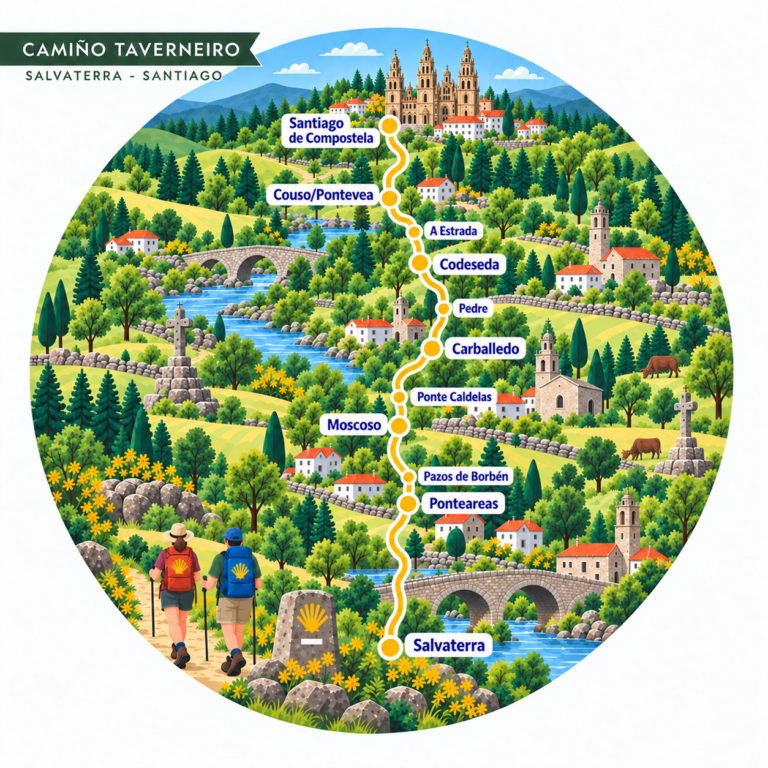
Camiño Taverneiro
Ponteareas → Moscoso → Carballedo → Codeseda → Couso/Pontevea → Santiago de Compostela.
Explore the route →A pilgrimage calls for preparation in several ways: physically, spiritually and by gathering information from Santiago’s Pilgrim’s Office, diocesan offices, confraternities of Saint James and associations of Friends of the Camino de Santiago. Former pilgrims and others involved in pilgrimage can provide useful information and practical advice.
ACC
Christian welcome on the Camino
Christian Welcome on the Camino (ACC), or Christian welcome on the Camino, brings together a significant number of dioceses and Church-run pilgrim hostels — belonging to parishes, religious orders, confraternities and others — in an effort to improve the welcome they offer pilgrims on the Camino de Santiago.
The pilgrimage to Santiago has grown and changed greatly in recent years. Religious motivation is not the only reason for making the journey, and for many pilgrims it is not the main one. For a significant number, however, it is, and they seek greater religious and spiritual support. Ultimately, Christ — the Way, the Truth and the Life — continues and will continue to meet everyone who becomes a pilgrim and to offer them his Gospel of salvation.
The Church has been involved in hospitality for pilgrims from the beginning. Today, other providers also play an important role: institutions, charitable organisations and private businesses that were not present on the Camino thirty years ago. Now that this diverse provision offers better practical care, there is a need for a welcome with a clearer identity.
Everyone should be present on the Camino as who they are. The Church is there to make Christ present and lead people to an encounter with him, firmly believing that he alone truly satisfies our hunger and thirst, heals the wounds of the soul and eases the weariness of the human heart. He is the destination and the meaning of every human pilgrimage.
ACC is not a formally established organisation, but a group of people who share their hopes and work. It includes:
- The Pilgrim’s Office in Santiago de Compostela.
- The Interdiocesan Commission of delegates for the Camino de Santiago.
- Men’s and women’s religious communities that welcome pilgrims on the Camino: Benedictines, Augustinians, Cistercians, Franciscans, Dominicans and others.
- Parish priests and parish-run pilgrim hostels.
- Hostel volunteers who devote their time and enthusiasm to caring for pilgrims in Church-run hostels and seek to accompany them on their journey of faith.
If you think your hostel or parish should take part in this initiative, write to info@acogidacristianaenelcamino.es.
PILGRIM CREDENTIAL AND COMPOSTELA
Pilgrim’s Office
The Pilgrim’s Office welcomes pilgrims arriving in Santiago who have travelled on foot, by bicycle or on horseback to the tomb of Saint James the Greater. Here, the final stamp of the Camino — that of Santiago Cathedral — is placed in their pilgrim credentials, and the traditional pilgrimage certificate, known as the Compostela, is issued.
Address: Rúa Carretas, 33 – 15705 Santiago de Compostela
Telephone: +34 981 568 846
Opening hours
Holy Week and 1 April–31 October: 8:00 am–8:00 pm (closing may be brought forward by up to 60 minutes, depending on demand).
Winter, 1 November–31 March, excluding Holy Week: Monday–Sunday, 10:00 am–7:00 pm.
Closed on 25 December and 1 January.
To collect the Compostela, you must obtain a ticket with a QR code that lets you check the queue’s progress in real time. At particularly busy times, collection of the Compostela on the same day cannot be guaranteed.
On arriving in Santiago
Embracing the Apostle, visiting his tomb, receiving the Compostela… Discover the rites with which pilgrims complete their Camino in the Cathedral.
